Backloading explained: how shared truck interstate moves actually work
Backloading can cut an interstate move by 30 to 45 percent. It also asks you to give up the one thing most people want: a delivery date. Here is the honest trade.
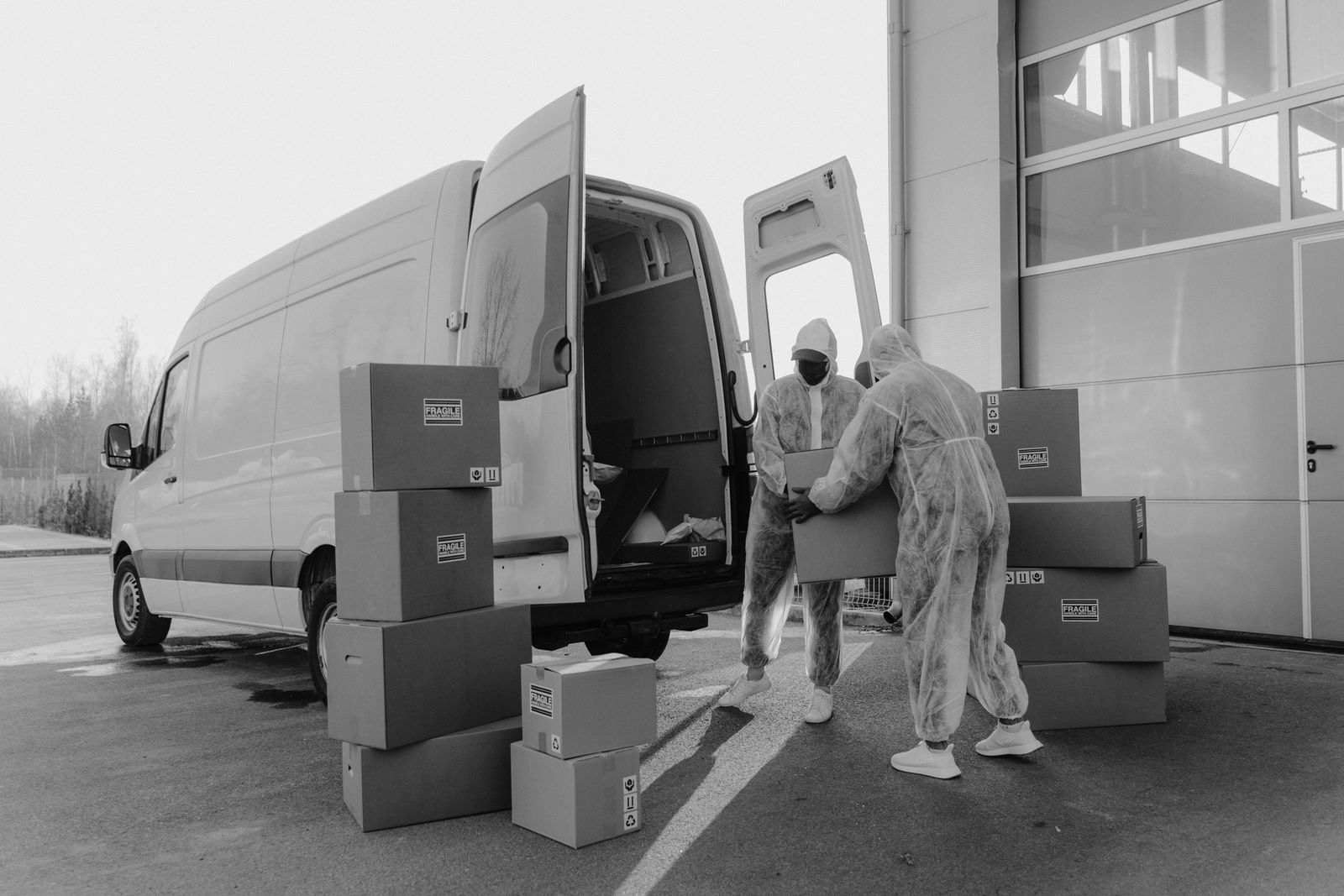
A truck that carries a full load from Melbourne to Sydney has to get home. If it drives back empty, the operator wears the fuel, the tolls and the driver hours for nothing. Selling that empty space cheaply is better than selling it not at all, and that is the entire economics of backloading.
What you are actually buying
You are buying cubic metres of space on a truck whose schedule is already set. You are not buying a date, an exclusive trailer, or the right to change your mind on the morning. In exchange, in our sample pricing, a two bedroom load to Sydney runs $2,280 to $3,120 as a backload against $3,900 and up on a dedicated truck.
The saving grows with distance, because linehaul is the biggest cost in a long move. Melbourne to Perth on a dedicated truck is eye watering. As a backload on a fortnightly run it is merely expensive.
Departure days are the whole game
Our corridors run to a timetable:
- Sydney: Mondays and Thursdays, 2 to 4 business days in transit
- Brisbane: Tuesdays and Fridays, 4 to 7 business days
- Adelaide: Wednesdays and Saturdays, 2 to 4 business days
- Canberra: Mondays, 2 to 5 business days
- Perth: every second Friday, 7 to 12 business days
If your settlement lands on a Wednesday and the Brisbane truck left on Tuesday, you wait until Friday. That is not a service failure, it is the deal. The corridors with two departures a week are far more forgiving than Canberra, where a missed run costs you seven days.
Minimum volumes and why they exist
Most backloads carry a minimum of 8 to 10 cubic metres. Below that, the handling at both ends costs more than the space is worth, and you are better off on a shared linehaul consignment priced as a part load. A queen bed, a bookshelf and eight cartons to Sydney is a part load, not a backload.
What a transit window means
A delivery window is a range of business days, not a soft date. Two to four business days after departure means your goods might arrive on day two or on day four, and both are on time. You get a call the afternoon before with a two hour arrival slot.
Plan your life around the far end of the window. Book a week of accommodation, keep an air mattress and a kettle in the car, and do not schedule a tradesperson for the day you hope the truck arrives.
The customers who are happiest with backloading are the ones who booked five nights of accommodation and got their furniture on night three. The unhappy ones booked two nights.
Is anything different about how your furniture is handled?
No. The same blankets, the same shrink wrap, the same load bars and the same numbered inventory. Your consignment is separated from the other load by load bars and, on a good truck, a bulkhead. The physical care is identical. What changes is the paperwork discipline, and it matters more, because with two consignments on a truck the inventory is the only thing that proves what is yours.
Six ways to get a better backload rate
- Offer a three day uplift window instead of a fixed day. Worth 10 to 15 percent.
- Move mid month. The last three days of the month are the busiest in the country.
- Reduce the volume before you get quoted, not after. Sell the spare bed.
- Be packed and ready before the truck arrives. Loading delays get charged.
- Take the plants, the produce and the gas bottle out of the equation early.
- Ask what the rate is if you can also be flexible at the delivery end.
When backloading is the wrong choice
If you are moving for a job that starts Monday, if you have a tight settlement at both ends, or if you cannot be without your bed for a week, pay for the dedicated truck. Backloading trades certainty for money. That is a good trade when you have flexibility, and a terrible one when you do not.
Other guides

Pricing · 6 min read
How many cubic metres is your move? A Melbourne room by room guide
Read the guide
Interstate · 6 min read
What you cannot take across state borders, and what to do instead
Read the guide
Access · 6 min read
Moving in a Melbourne high rise: lift bookings, certificates and owners corporation rules
Read the guide